
Published: April 2026 | Last Updated: April 26, 2026 Read Time: 14 Minutes |
Table of Contents
What Is the True Aim of Education?
The true aim of education is the holistic development of the human being — intellectually, morally, and spiritually — so that individuals can live and contribute with purpose. Beyond credentials and cognitive training, it cultivates ethical judgment, critical awareness, and a meaningful orientation toward life and others. In Islamic philosophy, this is expressed as Falah — comprehensive flourishing in both this life and the next.
What Are the 4 Roles of Education?
The 4 roles of education are personal development, moral formation, social cohesion, and civic purpose — each essential, none sufficient alone. Personal development cultivates intellectual and moral capacity. Moral formation builds ethical character. Social cohesion transmits the values that hold communities together. Civic purpose produces citizens capable of participating in and improving their societies. In every serious purpose of education philosophy, these four roles must function as an integrated whole.
What Are the 4 Pillars of Education?
The 4 pillars of education, from UNESCO's 1996 Delors Report, are: Learning to Know, Learning to Do, Learning to Live Together, and Learning to Be. They represent a complete framework for human educational development, covering the purpose of formal education at every level. These pillars are mirrored with remarkable precision in the Islamic model of 'Ilm, 'Amal, Adab, and Tazkiyat al-Nafs — formulated over a millennium earlier.
What Are the Four C's in Education?
The Four C's in education are Critical Thinking, Communication, Collaboration, and Creativity — the core 21st-century competencies students need beyond content knowledge. Defined by the Partnership for 21st Century Learning (P21), they represent the aim of education in a complex, digital, and algorithmically mediated world: the capacity to evaluate, express, cooperate, and generate — rather than merely to recall.
What Is the Purpose of Education in Society?
The purpose of education in society is to transmit shared values, build the moral and intellectual capacity of each generation, and produce citizens capable of sustaining and improving collective life. The purpose of public education specifically is to ensure this process is universal — available to every member of the community, regardless of background. In Islamic civilization, this was formalized as Fard Kifayah — a collective obligation the entire community owes to each of its members.
The true purpose of education is to develop the full human being — intellectually, morally, socially, and spiritually — so individuals can understand the world, contribute to it with conscience, and live with deliberate meaning.
To truly grasp this, we have to look beyond modern schooling and examine the history of knowledge exchange, tracing how early learning systems were explicitly designed to shape human character, not just produce workers.
This article answers what education is truly for by converging three frameworks:
Western Pedagogy: The foundational philosophies of cognitive and social development.
Modern Neuroscience: How the physical brain acquires, maps, and retains deep meaning.
The Islamic Intellectual Tradition: The civilization that built the world’s first universities and formalized the science of learning centuries before the Enlightenment.
These are not competing ideas. Placed alongside each other, they form a cross-civilizational consensus on what education has always meant across every culture serious enough to think about it.
But there is a fourth dimension we must address — one no other guide talks about, and it is the most urgent: modern algorithms are actively competing with education for control of the developing human mind. Understanding the aim of education today requires understanding exactly what is working against it.
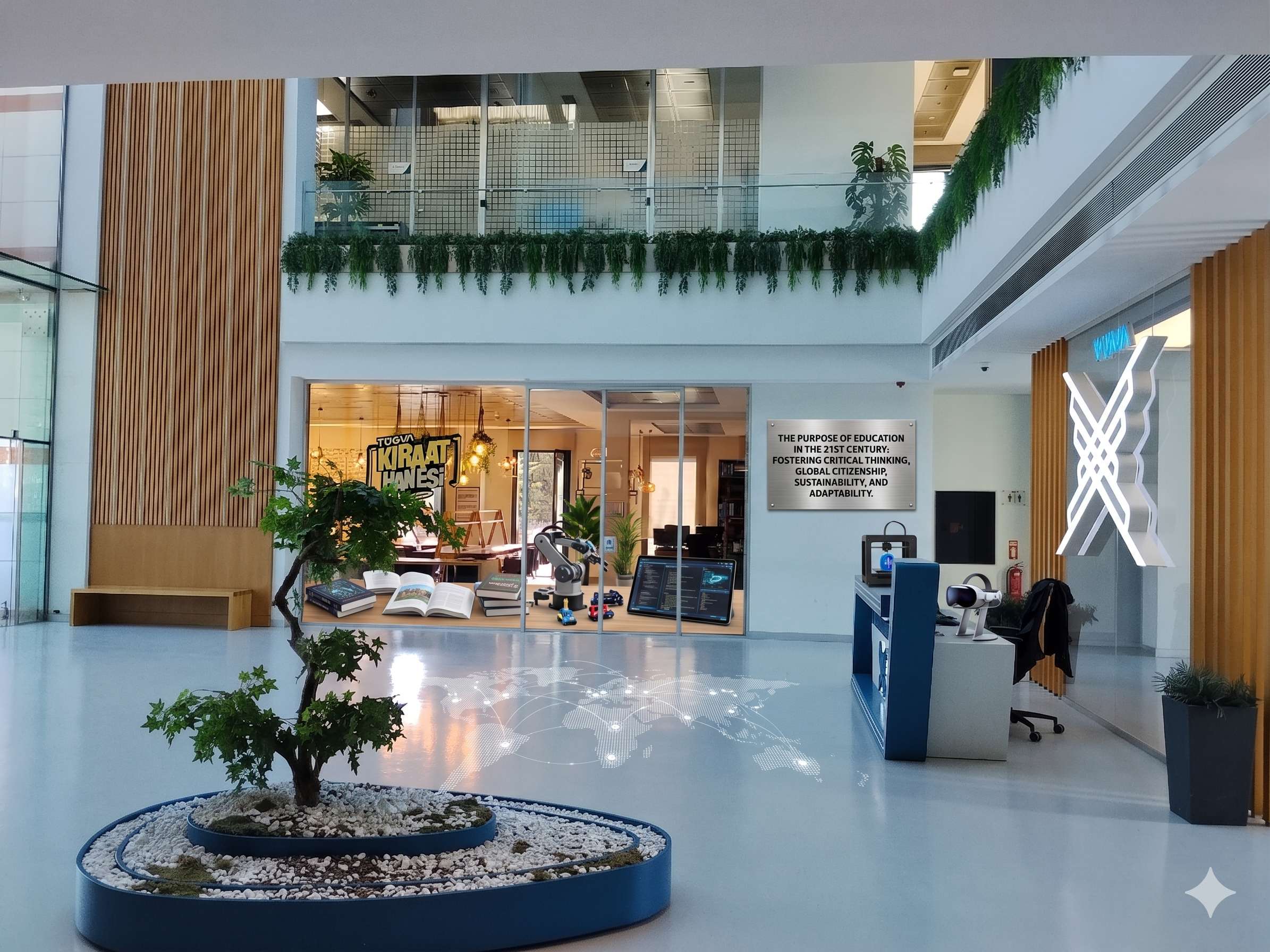
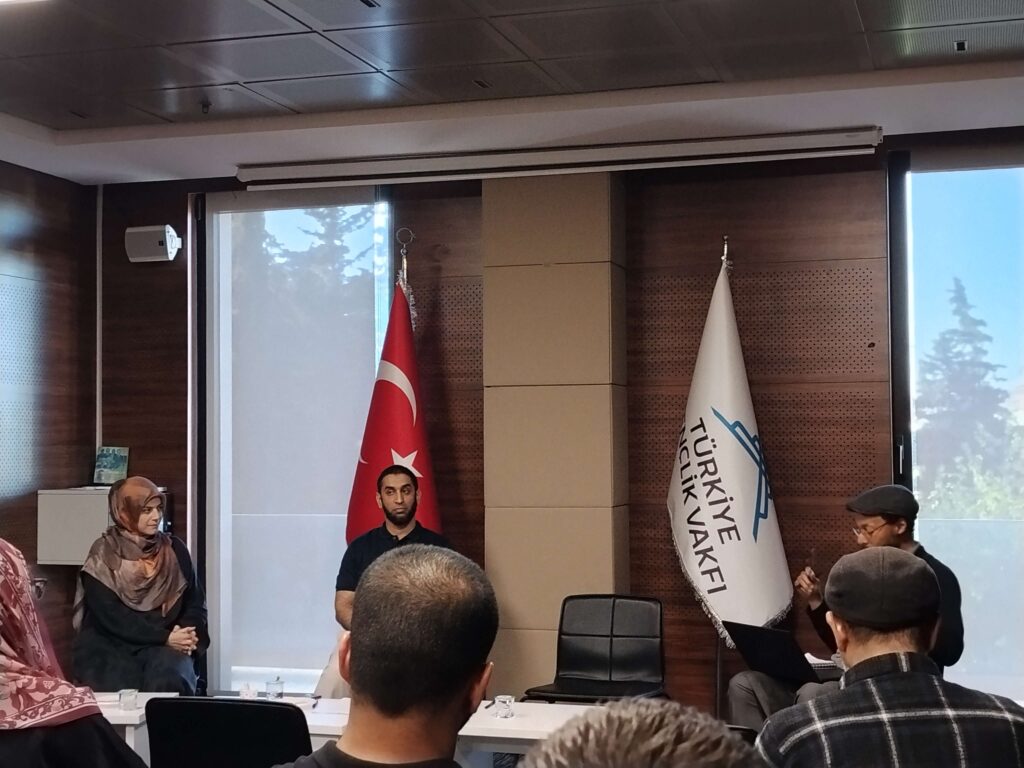
To truly understand this intersection of classical philosophy and modern algorithmic challenges, we have to look at where these conversations are happening in the real world. The frameworks in this article were developed and refined during recent attendance at the Istanbul Youth Network conference, organized by TÜGVA (Türkiye Gençlik Vakfı), which brought together global minds to solve this exact crisis.

What Are the 4 Core Purposes of Education?
The 4 core purposes of education appear consistently across philosophy, global policy, and every major intellectual tradition. They are not competing answers. They are four dimensions of a single, complete answer to what is the aim of education.
- Personal Development — Education cultivates the individual’s capacity to think, reason, reflect, and understand themselves and the world they inhabit.
- Moral Formation — Education builds ethical character: the capacity to distinguish right from wrong and to act on that distinction under real pressure.
- Social Cohesion — Education transmits the values, norms, and shared responsibilities that hold communities together across generations.
- Civic Purpose — Education produces individuals capable of participating in, questioning, and improving the societies they belong to. While many measure the biggest benefits of education in economic terms, forming good citizenship is the core purpose of education that ultimately sustains democratic and communal life Good citizenship is not a byproduct of schooling — it is one of its four foundational goals.
The Role and Purpose of Education
Whether examining the purpose of primary education in early childhood or the broader purpose of public education at scale, a system that serves only one of these four purposes fails the other three. An education engineered purely for intellectual output produces brilliant people without conscience. A system designed only for social conformity produces communities without the critical thinkers needed to correct their own errors. The role and purpose of education is always the integration of all four dimensions — simultaneously, not sequentially.
The Four Pillars of Education
Learning: The Treasure Within — distilled the role and purpose of education into four globally recognized pillars that remain the foundational reference in international policy, covering the purpose of formal education at every level from primary through tertiary.
| Pillar | What It Actually Means |
|---|---|
| Learning to Know | Mastering how to learn, not just what to learn; developing the tools of understanding itself |
| Learning to Do | Applying knowledge with competence and judgment in real conditions |
| Learning to Live Together | Building genuine empathy, cooperation, and the capacity to navigate difference |
| Learning to Be | Developing one’s full humanity — moral, emotional, intellectual, and spiritual |
The fourth pillar — Learning to Be — is the one most systematically abandoned by modern education systems under pressure to produce measurable economic outputs. It is also, by every serious account of Educational philosophy as understood in the 21st century builds on. , the most important.
The Purpose of the Education System
What mainstream literature on the purpose of the education system almost never acknowledges is that the Islamic tradition of ‘Ilm — knowledge in its full sense — mapped these exact dimensions over a millennium before the Delors Report was written.
| Islamic Dimension | Core Meaning | UNESCO Parallel |
|---|---|---|
| ‘Ilm al-Yaqin — Verified Knowledge | Knowing through reason, evidence, and revelation | Learning to Know |
| ‘Amal — Righteous Action | Knowledge that does not produce beneficial deeds is considered incomplete | Learning to Do |
| Adab — Ethical Conduct | Knowledge refines how one treats others and relates to the world | Learning to Live Together |
| Tazkiyat al-Nafs — Purification of the Self | Education elevates the soul toward its highest human potential | Learning to Be |
The Prophet Muhammad ﷺ said: “Seeking knowledge is an obligation upon every Muslim” (Ibn Majah). This declaration transformed the aim of education from a class privilege into a universal moral imperative — binding on every person regardless of gender, lineage, or social standing, twelve centuries before universal education movements emerged in the West.
[INTERNAL LINK: Islamic Philosophy and the Purpose of Knowledge]
What Is the Main Purpose of Education in Society?
The main purpose of education in society is to ensure that each new generation inherits not just information, but the values, reasoning capacity, and moral responsibilities that make collective human life both possible and worth living. This transmission of collective memory is exactly why history matters to societal development — it prevents communities from repeating destructive patterns and anchors them in shared human values. Every serious educational philosophy converges on this conclusion from different directions. What divides the great thinkers is not the destination — it is the mechanism.
The Purpose of Education Philosophy
John Dewey argued that education is life itself, not a preparation for it. Learning is the reconstruction of experience, and its purpose of education in society is the continuous growth of each person’s capacity to participate fully and thoughtfully in shared life.
Paulo Freire argued that the dominant purpose of the education system had been corrupted — turned into a “banking model” where students are passive recipients of information determined by those in power. The true aim of education, Freire insisted, is conscientization: the development of critical awareness that enables people to understand and transform the conditions of their own existence.
Maria Montessori argued that the purpose of formal education is to follow the child’s natural development — that the human being arrives equipped with an intrinsic drive toward learning that schooling must serve, not suppress.
Three distinct mechanisms. One shared destination: a human being capable of living with awareness, agency, and moral seriousness.
The Purpose of Public Education
The Islamic tradition grounds the main purpose of education in society in a concept with no direct Western equivalent: Khalifah (خليفة) — stewardship or vicegerency.
The Quran states: “Indeed, I will make upon the earth a vicegerent” (Quran 2:30). Every human being is entrusted with the stewardship of creation. Education is the process by which a person becomes capable of fulfilling that trust — not merely intellectually, but morally and spiritually.
This means the purpose of public education in Islamic civilization was never conceived as an individual transaction between a student and a credential. It was a Fard Kifayah — a collective social obligation the entire community owes to each of its members, regardless of class or origin.
What Is the Ultimate Purpose of Education
Al-Ghazali (1058–1111 CE), in his masterwork Ihya Ulum al-Din, articulated the ultimate purpose of education with precision: the simultaneous cultivation of the intellect (‘Aql) and the purification of the heart (Qalb). Neither is sufficient without the other. A sharp intellect without a purified heart produces, in Al-Ghazali’s formulation, the most dangerous kind of person: one who can justify harm with precision. That warning — made in the 11th century — has never been more relevant than it is today.
[INTERNAL LINK: Al-Azhar and the History of University Education]
What Is the Purpose of Education in the 21st Century?
The purpose of education in the 21st century has not fundamentally changed — but the forces competing against it have grown more powerful and more sophisticated than at any previous point in human history. Understanding the aim of education today requires understanding both its enduring philosophical core and the new threats to its delivery.
The Purpose of Education Philosophy: Key Thinkers, East and West
The purpose of education philosophy as understood in the 21st century builds on — rather than replaces — what came before:
| Thinker | Their Claim on the Purpose of Education |
|---|---|
| John Dewey | Education is the continuous reconstruction of experience toward fuller participation in shared life |
| Paulo Freire | Education must produce critical consciousness — awareness that liberates rather than domesticates |
| bell hooks | Education is the practice of freedom; the whole self — body, mind, spirit — must be present |
| Ken Robinson | The purpose of education must include cultivating creativity; current systems structurally suppress it |
| Al-Ghazali | The ultimate purpose of education is simultaneous sharpening of intellect and purification of soul |
| Ibn Rushd (Averroes) | Reason and revelation are complementary — rational inquiry is an Islamic obligation |
| Syed Muhammad Naquib al-Attas | The purpose of education is to produce the Insan al-Kamil — the complete human being — through the proper ordering of knowledge within an ethical framework |
What unites these thinkers across centuries and civilizations is a convergent conclusion: the ultimate purpose of education is human flourishing. Aristotle called it eudaimonia. Islamic philosophy calls it Falah (فلاح) — comprehensive well-being in this life and the next. The vocabulary differs. The destination is the same.
The Islamic Tripartite Model: Ta'lim, Tarbiyah, Ta'dib
Islamic educational philosophy offers the most structurally complete framework for the purpose of education in the 21st century — and it is almost entirely absent from mainstream education discourse:
| Islamic Term | Meaning | What It Addresses |
|---|---|---|
| Ta’lim (تعليم) | Instruction and transmission of knowledge | Cognitive and academic development |
| Tarbiyah (تربية) | Holistic nurturing of character, values, and human potential | Moral and emotional formation |
| Ta’dib (تأديب) | Cultivation of moral discipline and the proper ordering of knowledge | Ethical refinement and practical wisdom |
Syed Muhammad Naquib al-Attas argued that the modern education system’s crisis is fundamentally a crisis of Adab — the loss of the proper ordering of knowledge. When knowledge is produced without a framework that assigns it moral direction and meaning, it becomes a civilizational weapon pointed inward. This diagnosis — made decades ago — anticipated today’s global conversation about AI ethics, algorithmic accountability, and values-based education with startling accuracy.
How Algorithms Are Reshaping the Purpose of Education
Every student alive today is being educated by two systems simultaneously: the formal education system they attend, and the algorithmic recommendation systems they inhabit for an average of 7–9 hours per day.
The second system does not answer to any ministry of education. It was not designed by pedagogues. It was built to maximize engagement — which means it optimizes for the precise opposite of what the purpose of education requires.
The result is an invisible curriculum that operates 24 hours a day and directly competes with everything the purpose of the education system is designed to accomplish:
Sustained Attention vs. Attention Fragmentation — Where education cultivates sustained attention, algorithms are engineered around attention fragmentation: the average session involves context-switching every 15–34 seconds.
Critical Evaluation vs. Emotional Reaction — Where education builds critical evaluation, algorithms reward emotional reaction: content that produces outrage or desire travels further and faster than content that produces understanding.
Tolerance for Complexity vs. Confirmation Bias — Where the role and purpose of education requires tolerance for complexity, algorithms optimize for simplicity and confirmation: showing users versions of reality that match and amplify what they already believe.
Wisdom vs. Return Visits — Where education aims at wisdom, algorithms aim at return visits: two goals that are, in structural terms, opposites.
This is not a parenting problem or a screen-time debate. It is a civilizational design conflict — between the institutions humanity built to develop its members deliberately, and the systems built to monetize human attention at scale.
What Is the Aim of Education vs. What Algorithms Optimize For
| Education’s Aim | Algorithmic Optimization | Structural Conflict |
|---|---|---|
| Cultivate sustained attention | Maximize engagement through interruption | Attention architecture vs. addiction architecture |
| Build critical evaluation skills | Reward emotional reactivity | Slow thinking vs. fast reaction |
| Develop tolerance for complexity | Serve confirming, simplified content | Intellectual growth vs. epistemic comfort |
| Produce wisdom and understanding | Produce return visits and ad impressions | Human flourishing vs. attention extraction |
What Is the Value of Education in the Age of Algorithms
The scientific evidence on algorithmic platforms and cognitive development is no longer preliminary.
Dopamine and the Learning System — Algorithmic platforms exploit the brain’s dopamine reward circuitry — the same system that governs motivation, curiosity, and learning — through unpredictable micro-rewards (notifications, new content, social validation signals). This produces compulsive engagement patterns that neurologically compete with the focused, sustained attention that the purpose of formal education requires.
Attention Architecture — Research published in Nature Human Behaviour links heavy social media use in adolescents to measurable reductions in sustained attention capacity — the foundational cognitive skill for every form of learning. The purpose of the education system assumes a student capable of holding focus. Algorithmic architecture is specifically designed to prevent it.
Epistemic Distortion — MIT Media Lab research established that false information spreads approximately six times faster on algorithmic platforms than verified information. Students conditioned by algorithmic environments to consume fast, emotionally resonant content are systematically less equipped to evaluate claims — which is, in every tradition examining the aim of education, the core competency schooling exists to build.
Identity Formation Under Algorithmic Influence — Adolescence is the critical developmental window for identity formation. Algorithmic systems construct epistemic chambers around young people at the precise moment the purpose of education is trying to open them to complexity, contradiction, and growth.
What Is the Ultimate Purpose of Education When Algorithms Compete for the Developing Mind
The Islamic intellectual tradition offers a pre-modern but structurally precise framework for understanding what algorithmic culture is doing to the aim of education — and why it matters not just strategically, but theologically.
Maqasid al-Shariah — the Higher Objectives of Islamic Law, systematized by Al-Ghazali — identifies the protection of ‘Aql (عقل — the rational intellect) as one of the five non-negotiable obligations of a just society, alongside the protection of life, lineage, property, and faith. Protecting the intellect is classified as a matter of essential justice. It is not optional.
Tafakkur (تفكر — deep contemplative thinking) is a Quranic practice: the deliberate, unhurried reflection on existence and meaning that the Quran commands repeatedly. Algorithmic culture is the structural opposite of Tafakkur. It is engineered to prevent exactly the kind of sustained, patient engagement with ideas that both Tafakkur and the purpose of formal education require.
Tadabbur (تدبر — pondering the depth of meaning) requires sitting with difficulty, holding contradiction, and resisting the pull toward fast resolution. Algorithms are reward machines for fast resolution — they make Tadabbur feel unnatural because they have trained the nervous system to expect immediate stimulation.
Adab — in Al-Attas’s formulation — is the capacity to recognize what is worth knowing, to place knowledge in its proper hierarchy, and to resist the seductive equivalence that algorithmic curation produces: the illusion that all content is equally meaningful because all content is equally accessible.
Al-Ghazali warned in Ihya Ulum al-Din that knowledge without moral grounding is not neutral — it is actively dangerous. We now have the most powerful knowledge-delivery infrastructure in human history operating entirely without a framework of moral discernment. Al-Ghazali did not predict the algorithm. But he diagnosed its spiritual consequence nine centuries in advance.
Good Citizenship the Purpose of Education — What Must Now Be Explicitly Taught
Given the algorithmic environment every learner now inhabits, the purpose of education in the 21st century must explicitly encompass:
Algorithmic literacy — understanding how recommendation systems work and what they optimize for
Metacognitive discipline — the trained capacity to observe one’s own attention and choose depth over stimulation
Restored Tafakkur — structured, distraction-free deep thinking as a core curricular practice
Epistemic humility — the recognition that certainty arrived at quickly is almost always algorithmic confirmation, not genuine understanding
The hierarchy of knowledge — the explicitly taught distinction between information, knowledge, and wisdom that Ta’dib has always demanded and algorithms systematically collapse
The purpose of education has always been to prepare learners for the world as it actually is. The world as it actually is now includes systems that compete directly with education’s deepest goals. An education that ignores this is not neutral — it is losing the most consequential contest in the formation of human minds, by default, every single day.
How Algorithms Are Reshaping the Purpose of Education
This is the section no competitor has written — and it is the most urgent educational conversation of the current decade. It sits at the exact intersection where science, Islamic philosophy, and the lived reality of every modern learner converge.
The Invisible Curriculum Running Alongside the Official One
Every student alive today is being educated by two systems simultaneously: the formal education system they attend, and the algorithmic recommendation systems they inhabit for an average of 7–9 hours per day.
The second system does not answer to any ministry of education. It was not designed by pedagogues. It was built to maximize engagement — which means it optimizes for the precise opposite of what the purpose of education requires.
The result is an invisible curriculum that operates 24 hours a day and directly competes with everything the purpose of the education system is designed to accomplish:
- Where education cultivates sustained attention, algorithms are engineered around attention fragmentation — the average session involves context-switching every 15–34 seconds.
- Where education builds critical evaluation, algorithms reward emotional reaction — content that produces outrage or desire travels further and faster than content that produces understanding.
- Where the role and purpose of education requires tolerance for complexity, algorithms optimize for simplicity and confirmation — showing users versions of reality that match and amplify what they already believe.
- Where education aims at wisdom, algorithms aim at return visits — two goals that are, in structural terms, opposites.
This is not a parenting problem or a screen-time debate. It is a civilizational design conflict — between the institutions humanity built to develop its members deliberately, and the systems built to monetize human attention at scale.
What Neuroscience Establishes About Algorithms and the Developing Mind
The scientific evidence on algorithmic platforms and cognitive development is no longer preliminary:
Dopamine and the Learning System: Algorithmic platforms exploit the brain’s dopamine reward circuitry — the same system that governs motivation, curiosity, and learning — through unpredictable micro-rewards (notifications, new content, social validation signals). This produces compulsive engagement patterns that neurologically compete with the focused, sustained attention that the purpose of formal education requires.
Attention Architecture: Research published in Nature Human Behaviour links heavy social media use in adolescents to measurable reductions in sustained attention capacity — the foundational cognitive skill for every form of learning. The purpose of the education system assumes a student capable of holding focus. Algorithmic architecture is specifically designed to prevent it.
Epistemic Distortion: MIT Media Lab research established that false information spreads approximately six times faster on algorithmic platforms than verified information. Students conditioned by algorithmic environments to consume fast, emotionally resonant content are systematically less equipped to evaluate claims — which is, in every tradition examining the aim of education, the core competency schooling exists to build.
Identity Formation Under Algorithmic Influence: Adolescence is the critical developmental window for identity formation. Algorithmic systems construct epistemic chambers around young people at the precise moment the purpose of education is trying to open them to complexity, contradiction, and growth.
The Islamic Response: ‘Aql, Tafakkur, and the Protection of the Intellect
The Islamic intellectual tradition offers a pre-modern but structurally precise framework for understanding what algorithmic culture is doing to the aim of education — and why it matters not just strategically, but theologically.
Maqasid al-Shariah — the Higher Objectives of Islamic Law, systematized by Al-Ghazali — identifies the protection of ‘Aql (عقل — the rational intellect) as one of the five non-negotiable obligations of a just society, alongside the protection of life, lineage, property, and faith. Protecting the intellect is classified as a matter of essential justice. It is not optional.
Tafakkur (تفكر — deep contemplative thinking) is a Quranic practice: the deliberate, unhurried reflection on existence and meaning that the Quran commands repeatedly. Algorithmic culture is the structural opposite of Tafakkur. It is engineered to prevent exactly the kind of sustained, patient engagement with ideas that both Tafakkur and the purpose of formal education require.
Tadabbur (تدبر — pondering the depth of meaning) requires sitting with difficulty, holding contradiction, and resisting the pull toward fast resolution. Algorithms are reward machines for fast resolution — they make Tadabbur feel unnatural because they have trained the nervous system to expect immediate stimulation.
Adab — in Al-Attas’s formulation — is the capacity to recognize what is worth knowing, to place knowledge in its proper hierarchy, and to resist the seductive equivalence that algorithmic curation produces: the illusion that all content is equally meaningful because all content is equally accessible.
Al-Ghazali warned in Ihya Ulum al-Din that knowledge without moral grounding is not neutral — it is actively dangerous. We now have the most powerful knowledge-delivery infrastructure in human history operating entirely without a framework of moral discernment. Al-Ghazali did not predict the algorithm. But he diagnosed its spiritual consequence nine centuries in advance.
What the Purpose of Education Must Now Explicitly Include
Given the algorithmic environment every learner now inhabits, the purpose of education in the 21st century must explicitly encompass:
- Algorithmic literacy — understanding how recommendation systems work and what they optimize for
- Metacognitive discipline — the trained capacity to observe one’s own attention and choose depth over stimulation
- Restored Tafakkur — structured, distraction-free deep thinking as a core curricular practice
- Epistemic humility — the recognition that certainty arrived at quickly is almost always algorithmic confirmation, not genuine understanding
- The hierarchy of knowledge — the explicitly taught distinction between information, knowledge, and wisdom that Ta’dib has always demanded and algorithms systematically collapse
The purpose of education has always been to prepare learners for the world as it actually is. The world as it actually is now includes systems that compete directly with education’s deepest goals. An education that ignores this is not neutral — it is losing the most consequential contest in the formation of human minds, by default, every single day.
[INTERNAL LINK: Digital Literacy and the Future of Learning] [INTERNAL LINK: Islamic Ethics and Technology Governance]
Istanbul Your Network: The Purpose of Education Conference
Theory means little without action. To move these philosophies from framework into practice, we invite you to join the upcoming Istanbul Your Network conference.
Organized in partnership with TÜGVA (Türkiye Gençlik Vakfı) and hosted in collaboration with Istanbul 29 Mayıs University, this summit brings together leading minds to address the future of holistic learning, ethical frameworks, and family education.
Keynote Speakers Include:
Danish Qasim – Founder of In Shaykh Clothing, leading the discourse on ethical boundaries and moral formation in religious education.
Jenny Molendyk – Prominent educator and advocate for holistic family learning and digital-age parenting.
Dr. Zeynep Çilincir – Distinguished academic and researcher from Istanbul 29 Mayıs University.
Kevin Marshall – Educational leader representing the Our Islamic Homeschool framework.
Expert Authors & Editors – Featuring lead voices from Ink Publications on the role of specialized literature in shaping young minds.
Quotes About the Purpose of Education: What the Greatest Minds Said
These are not decorative additions. Each of the following quotes about the purpose of education represents a distinct philosophical position — and together they form a cross-civilizational consensus on the ultimate purpose of education:
“It is the mark of an educated mind to be able to entertain a thought without accepting it.” — Aristotle
“Seek knowledge from the cradle to the grave.” — Attributed to Prophet Muhammad ﷺ
“Whoever follows a path seeking knowledge, Allah will make his path to Paradise easy.” — Prophet Muhammad ﷺ (Sahih Muslim)
“The function of education is to teach one to think intensively and to think critically. Intelligence plus character — that is the goal of true education.” — Martin Luther King Jr.
“Education is not the filling of a pail, but the lighting of a fire.” — William Butler Yeats
“The whole purpose of education is to turn mirrors into windows.” — Sydney J. Harris
Six quotes about the purpose of education. Three civilizational traditions — Islamic, Greek, and Western humanist. One shared destination: education exists to make human beings more fully human.
Primary Religious Texts
The Quran: * Surah 2:30 — “Indeed, I will make upon the earth a vicegerent” — used to establish the Islamic concept of Khalifah as the foundation of educational purpose.
Surah 2:31 — “And He taught Adam the names of all things” — used to frame the act of learning as a divine endowment.
Hadith Literature:
Sunnah.com: Sunan Ibn Majah — “Seeking knowledge is an obligation upon every Muslim” — used to establish the universality of the Islamic educational imperative.
Sunnah.com: Sahih Muslim — “Whoever follows a path seeking knowledge, Allah will make his path to Paradise easy.”
2. Classical Islamic Scholarly Works
Al-Ghazali (1058–1111 CE): Ihya Ulum al-Din (Revival of the Religious Sciences) — cited for the ultimate purpose of education as the simultaneous cultivation of the intellect (‘Aql) and the purification of the heart (Qalb).
Syed Muhammad Naquib al-Attas: The Concept of Education in Islam — cited for the framework of Ta’dib and the proper ordering of knowledge to produce the Insan al-Kamil.
3. Modern Scientific & Institutional Literature
UNESCO (1996): Learning: The Treasure Within (The Delors Report) — cited for the Four Pillars of Education framework.
MIT Media Lab (2018): The Spread of True and False News Online (Science) — cited for empirical data on algorithmic epistemic distortion and the velocity of false information.
Nature Human Behaviour (2023): Adolescent neural sensitivity to social feedback — cited for research linking algorithmic architecture to reductions in sustained attention capacity.